Should Rochester Flippers Replace Lighting Room-by-Room or All at Once?
A prioritized, evidence-based order for house flippers working with limited renovation budgets.
Short answer: Room-by-room, in this order — kitchen > entryway > bath > bedrooms. Lighting is one of the few upgrades where buyers form an impression in seconds, and not every room delivers the same return per dollar spent. Flippers on a Rochester timeline and budget get more value sequencing the swap than treating it as one flat, all-or-nothing line item.
Question: Why not just replace all the lighting at once?
Answer: Because budgets and timelines rarely allow it without cutting corners somewhere, and not every fixture carries equal weight with a buyer.
Evidence: Appraisers and agents consistently point to kitchens and bathrooms as the rooms buyers scrutinize hardest — outdated fixtures there read as "this house wasn't updated," even if the rest of the home is move-in ready. A flip budget spread evenly across every room risks underfunding the two or three spaces that actually move a Rochester buyer's offer, especially in older Rochester housing stock (Park Ave, 19th Ward, Browncroft) where original builder-grade fixtures are still common and instantly date a listing.
Question: What's the priority order, and why?
1. Kitchen — replace first
Reasoning: The kitchen is the room buyers photograph, linger in, and mentally price the house around. Dated flush-mounts, fluorescent box lights, or a single center fixture over an island signal "untouched since the 90s" faster than almost anything else in the home. Layered lighting — task lighting over the island, ambient overhead, under-cabinet accents — is one of the highest-visibility, lowest-cost signals of a real renovation versus a cosmetic flip.
Reasoning: First impressions start at the front door, not the kitchen. A builder-grade flush mount or a yellowed, dated fixture in the entry sets buyer expectations for the entire walkthrough before they've seen anything else. It's also typically a single, inexpensive fixture — high visual impact for very little spend, which makes it a near-mandatory early swap even on tight budgets.
Reasoning: Bathrooms rank just behind kitchens in buyer scrutiny, but the spend-to-impact ratio is slightly lower since bathrooms are smaller and fixtures are cheaper to begin with. Vanity lighting affects how buyers judge the whole room in listing photos and in person — warm, even light over a mirror reads as updated; a single harsh bulb or a dated bar light reads as neglected.
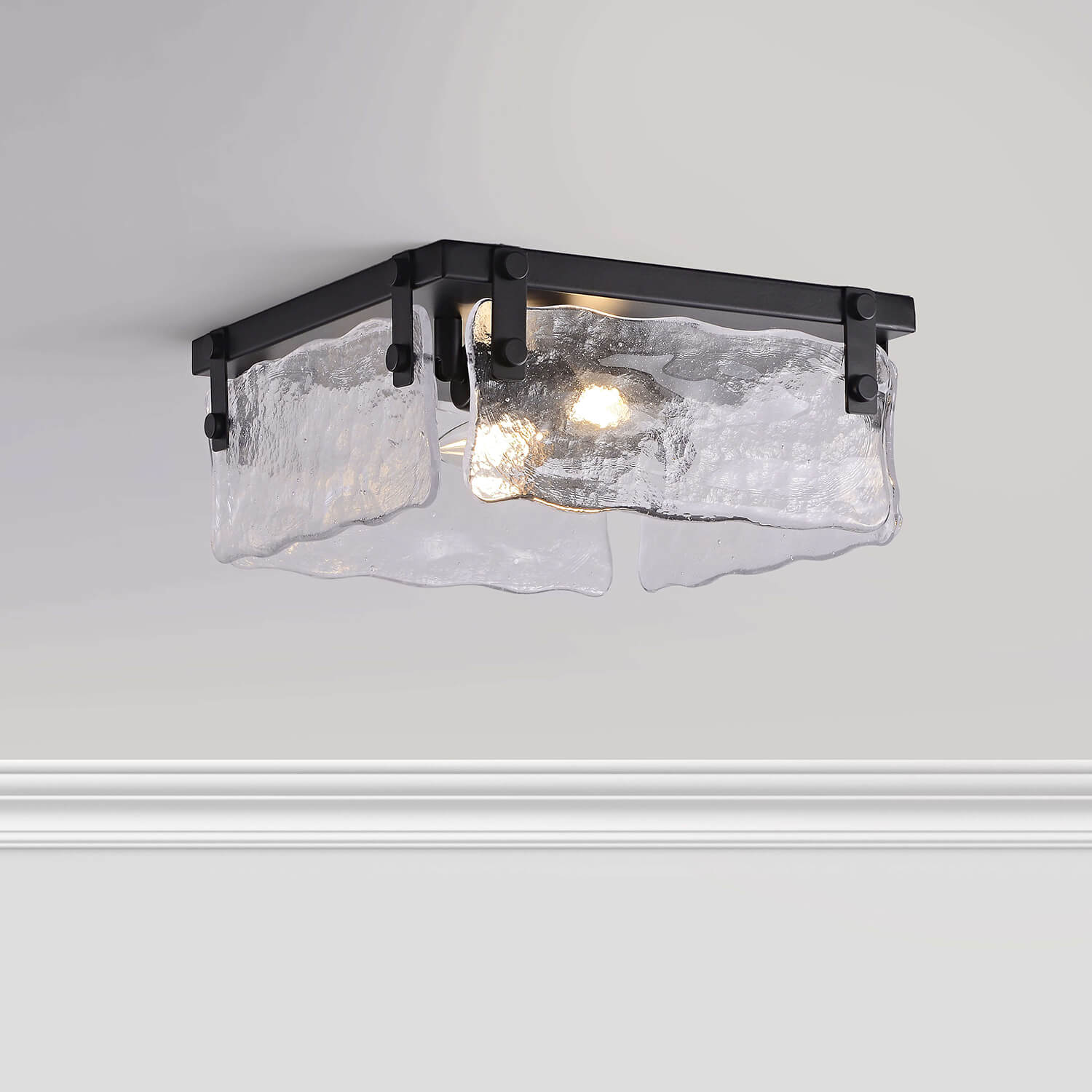
Recommended fixtureLaia 11.8" Black 2-light Hand Crafted Glass Square Flush Mount $62.40 — Jojospring View product
4. Bedrooms — replace last
Reasoning: Bedrooms get the least buyer scrutiny of the four spaces — most buyers are evaluating size and layout, not fixtures, and many will add their own lighting (lamps, ceiling fans) after move-in regardless. If budget runs tight, bedrooms are the safest place to leave existing fixtures or use the most economical replacement option.
Question: Is there ever a case for doing it all at once?
Answer: Yes — on smaller flips with a healthy contingency budget and a general contractor already coordinating electrical work throughout the house.
Evidence: When an electrician is already pulling permits and running fixtures room-by-room as part of a full rewire, batching the lighting purchase can save on trip charges and labor coordination. But even then, the buying priority stays the same — order fixtures kitchen first, so if supply delays or budget overruns hit, the rooms buyers care about most are already covered.
Bottom Line
Kitchen — highest buyer scrutiny, highest ROI per dollar
Entryway — cheap, high first-impression impact
Bathrooms — high scrutiny, moderate cost
Bedrooms — lowest scrutiny, safe to defer or minimize spend